Do People Write False Nasty Reviews on Amazon
CNN —
Most online reviews are 18-carat customer testimonies and valuable tools for shopping the internet. But as most shoppers are enlightened, at that place are also fake reviews lurking on platforms like Amazon that can throw y'all off if you aren't conscientious. It's of import to evaluate reviews with a wary eye, to learn how to spot fakes and to make certain, in the cease, you use them to help you get what you pay for.
According to the CEO of Fakespot, a free browser extension designed to weed out unreliable product ratings, the number of misleading reviews on Amazon soared in 2020. Fakespot CEO Saoud Khalifah blames the surge in review fraud on Covid-19, which has caused east-commerce to skyrocket and created steep competition for vendors hoping to tap into all that new money coming in.
"This year, starting from lockdown, the numbers exploded," Khalifah tells CNN Underscored.
It'd be a error to take online reviews as gospel and use them every bit your sole criterion for evaluating the quality of a production or retailer. However, yous'd likewise exist remiss to completely ignore online reviews when because a purchase. Beneath, we've put together a guide that should help you get the most out of reviews then they can be a powerful tool rather than a liability.
In that location are two main kinds of unreliable reviews. The first are bot reviews. Khalifah says computers spit these out in large numbers around major shopping events like Black Friday. While mutual, these kinds of reviews are fairly easy for third-party algorithms similar Fakespot to discover and weed out thanks to their awkward, keyword-studded sentences.
The more than insidious variety are promotional reviews, which are written by actual human beings who are compensated behind the scenes in commutation for glowing praise.
Khalifah says this type of review tends to primarily plague phone accessories, electronics and smaller appliances — annihilation that sellers tin can order in majority from a factory. However, no production is allowed, peculiarly as more shopping moves online.
"There are hundreds of individual groups on social media that solicit paid reviews," says Tommy Noonan, founder of ReviewMeta.com, another tool that aims to provide customers with more than accurate product ratings.
Khalifah calls such arrangements a kind of "review exchange club," where merchants send free products and other forms of compensation to potential reviewers in exchange for positive write-ups. An Amazon spokesperson confirmed to CNN Underscored, "Bad actors use social media platforms to recruit unsuspecting customers past offering complimentary products and gift cards in render for posting imitation product reviews."
This means that fifty-fifty an Amazon Verified Purchase review tin can be fake. Some reviewers really are buying products with their own coin in guild to score that trust-edifice "Verified Purchase" characterization, only to be reimbursed or compensated further for writing a positive review after.
Information technology's worth remembering that getting a product for free doesn't necessarily mean a review is imitation. Someone could be sent a production to review and genuinely think information technology deserves five stars. Still, soliciting or writing reviews without disclosing compensation expressly violates Amazon's customs guidelines equally well as FTC guidelines regarding endorsements inside advertising.
"We have clear policies for both reviewers and selling partners that prohibit abuse of our community features," an Amazon spokesperson told CNN Underscored, "and we append, ban and take legal action against those who violate these policies."
In a statement, Amazon said information technology utilizes "powerful machine learning tools and skilled investigators to analyze over 10 meg review submissions weekly, aiming to stop calumniating reviews before they are published. In addition, we keep to monitor all existing reviews for signs of abuse and quickly take activeness if we find an result. Nosotros besides proactively work with social media sites to report bad actors who are cultivating abusive reviews outside our store, and we've sued thousands of bad actors for attempting to abuse our reviews systems."
Upvoting and downvoting features can be hijacked non only to make a sparkling review stand out from the pack but also to sabotage competitors by floating negative reviews to the top of a product's page.
"The 'most helpful' reviews tin be substantially curated by the brand by paying people to click the 'helpful' push on reviews the brand wants at the top," Noonan says.
Khalifah adds, "You can upvote the most harmful one-star review, get it on the commencement folio, and now yous've discouraged the person from buying the product."
If you've ever clicked on a phone instance only to detect a bunch of reviews for a toaster, then you lot've stumbled onto yet another kind of review manipulation. Merchants buy out well-rated "dried listings" from other vendors, says Khalifah, "swap out the images and details, and voila: They've inherited hundreds (or even thousands) of v-star reviews without a single sale.
"They're betting on the fact that you're not really going to coil down and expect at the reviews and see that they're actually not for the production," Khalifah says.
Does all this mean that reviews are useless? Definitely non! Noonan acknowledges that nigh products do not accept a trouble with simulated reviews and advises people to exist skeptical and expect out for any suspicious patterns to place those that do.
Here are some tips to use reviews wisely:

Both Khalifah and Noonan say that only reading reviews is a big office of not getting swindled. "Don't just rely on the average rating and review count," Noonan adds. "Even something with 4.8 stars and 10,000 reviews tin be heavily manipulated, hijacked or one-tapped (i.e., rated without writing an accompanying review)."
Noonan also recommends sorting reviews by date, with the newest ones first: "Sometimes product quality changes over time, so scanning through new reviews helps get a sense if things have changed."
You lot can't read everything, of course, which is where tools like Fakespot and ReviewMeta step in. You tin can use either program every bit a browser extension (similar to something like Camelizer, which alerts you to changes in an item'south price history), equally an app or by simply plugging the URL of the product you're looking at into a toolbar on the companies' corresponding websites. Both platforms so utilize algorithms to detect suspicious patterns in the review write-ups every bit well as the history of the reviewers themselves. Blood-red flags include things like repetitive phrasing and spikes in the number of reviews being written in a very brusque menstruum of time.
Fakespot emphasizes the role of linguistic communication design recognition in this process, writing on the company FAQ page, "Linguistics play a huge function in every analysis, but it is far more complex than just looking for certain keywords." ReviewMeta, for its role, has an unabridged page devoted to explaining its statistical modeling and the 12 tests it uses to analyze review actuality.
Later running a production page through its algorithm, ReviewMeta presents customers with an adjusted numerical rating based only on reviews that accept been deemed trustworthy, along with a more in-depth report on where this number came from. Fakespot, meanwhile, assigns a production a letter of the alphabet grade from A to F that corresponds with review actuality (with an "A" grade meaning that a production has a higher percentage of reliable reviews than one with an "F" grade). The site has also launched new beta features that highlight review insights for shoppers, including the "most/least positive review."
These tools are not foolproof. Some users complain nigh having their legitimate reviews flagged or seeing unreliable reviews squeak through the algorithms. And given that tertiary-political party programs like this rely on publicly bachelor review data, they're going to be more accurate on products with more reviews to analyze.
In a statement provided to CNN Underscored, Amazon said that while information technology encourages users to use the "written report abuse" link button on reviews that seem suspicious, information technology does not endorse third-party review assay programs:
"Companies like Fakespot and ReviewMeta that claim to 'check' reviews cannot concretely determine the authenticity of a review, as they do not have access to Amazon'southward propriety information such every bit reviewer, seller and product history. […] The fact is they just do non have access to the data we have and they wrongly accuse reviews from genuine customers who have worked hard to provide valuable feedback so that other shoppers tin can do good. That is not to suggest that in that location aren't bad actors; we are aware of bad actors that attempt to corruption our systems and nosotros go on to invest meaning resources to protect the integrity of our reviews and nosotros volition not end working hard on behalf of our customers and selling partners."
Hither at Underscored, editors frequently utilize these programs to help analyze public sentiment around a production. We do not, however, view their findings equally absolute. Nosotros recommend consumers also use them only with a similarly wary eye, and as simply one tool amidst many.
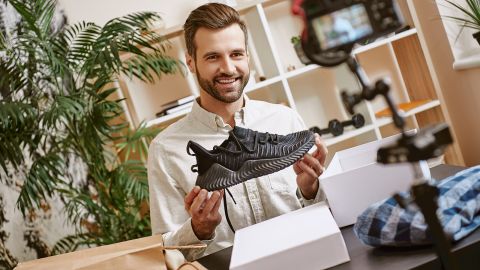
Khalifah also recommends looking to YouTube or other video reviews where you can encounter reviewers actually using the physical product. And, of course, websites like CNN Underscored exercise all-encompassing research and hands-on testing earlier recommending products to readers.

Take the number of reviews a product has with a grain of salt. Something like a phone charger with 30,000 reviews should probably heighten a few eyebrows regarding review authenticity, Khalifah believes, because it's the kind of matter that merely "works or doesn't piece of work." When you lot look at numbers like that, he says, you should inquire yourself, "Wait, who'south gonna write a review nearly a battery pack?"
Finally, Noonan says, "Always, ever, always return products when you experience like you've been swindled. Amazon has a great return policy, and this sends a strong financial message to both Amazon and the vendor that you will not tolerate low-quality products that are propped up by manipulated reviews."
Source: https://www.cnn.com/cnn-underscored/reviews/amazon-fake-reviews
0 Response to "Do People Write False Nasty Reviews on Amazon"
Post a Comment